CNN’s Fredricka Whitfield, interviews Gershon Baskin regarding his insights on the report that attacks on Iran by the USA were cancelled contingent On rapidly making a deal.
President Trump says he will hold off on new attacks on Iran as long as there is quick progress on a proposed deal with Tehran. The pause comes after Trump said Iran and other Middle Eastern countries made an appeal to give diplomacy time to work.
With us now is Gershon Baskin. He is a former hostage negotiator and is the Middle East Director at the International Communities Organization. Great to see you.
I mean, this is really fascinating. I mean, if you’re a negotiator for Iran and you look at the number of times the U.S. has threatened to attack Iran only to back away at the moment, I mean, does this change the method of negotiations? How do you read all of this?
GERSHON BASKIN, FORMER HOSTAGE NEGOTIATOR; MIDDLE EAST DIRECTOR, INTERNATIONAL COMMUNITIES ORGANIZATION: Well, I think from Iran’s position, they feel like they have the upper hand, they are winning in this war. They’ve won the war in terms of the way they perceive it and the backing down of Trump each time he wants to indicate that negotiations are going on is another victory for Iran. This is how the Iranian media is projecting it, this is how Iranian leaders are talking about it, and I am not sure that we fully understand why President Trump is giving in to allow them to have a sense of victory when President Trump keeps saying, we decimated them, we destroyed them. Their army is gone. Their ability to fight back is gone.
It is obvious that Iran is not the same kind of rational actor that the United States has experienced in other wars; Iran is willing to launch a war against all of its neighbors and damage the entire global economy by attacking infrastructure of oil and gas and means of production of energy distilleries, I mean, it is just the kind of thing that no one knows what to expect, what was supposed to be a war over the Iranian nuclear program has become a war over free transit in Hormuz. The war is completely changed.
WHITFIELD: Is the U.S. or Iran serious about a diplomatic solution?
BASKIN: I think that the parties that are most interested in diplomatic solution are the Gulf Arab states — the Saudis, the Emiratis, the Kuwaitis, the Bahrainis, all of these Gulf states that are producing oil and shipping oil is damaged by the closure of the Straits of Hormuz and the Bab el-Mandeb is jeopardizing their ability to continue to have oil flow around the world.
We are seeing the price of gas going up in the United States. We will see what happens on Wall Street tomorrow. It is deeply affecting the global economy. And this is why I think Trump keeps holding off on a decision to move forward with the war and deliver the devastating blow that he has been talking about.
WHITFIELD: I also want to ask you about Gaza. President Trump announced a deal that would see Hamas disarmed in Gaza and for Israel to withdraw. You said the moment to disarm Hamas is now.
Why do you think that? And how much hope do you have with this kind of agreement?
BASKIN: We have a period of time when the stars seem aligned, where both Hamas is at its weakest point ever, it is under tremendous amount of pressure from the mediators of Egypt, Qatar, Turkey and the two million Gazans who have been held hostage now for nine months by the continuation of the war, when it should have ended last November.
We also have a reality where Israel is heading for elections, and Prime Minister Netanyahu is not doing well in the polls. His strongest asset that he presents to the Israeli public, is his strong relationship with President Trump.
So the Americans know that Netanyahu is in a position where he can’t really say no, even though his base is strongly against this agreement. There is still great misunderstanding of what the agreement is and dissatisfaction in Israel that Hamas is not really going to disarm. They are going to store the weapons, but someone on the American team told me the intention is to eventually destroy those weapons.
We have to understand that this is going to take time. It is not overnight. It is not a matter of days or weeks even, but it is a first step on a process that should have happened already nine months ago and it is good that it is happening now.
WHITFIELD: Both Hamas and Israel have added caveats to the deal, essentially saying the other side has to go first. You know, there are reports today that Israeli Prime Minister Netanyahu is expressing doubts about the deal. So, what will it take to actually see this go through?
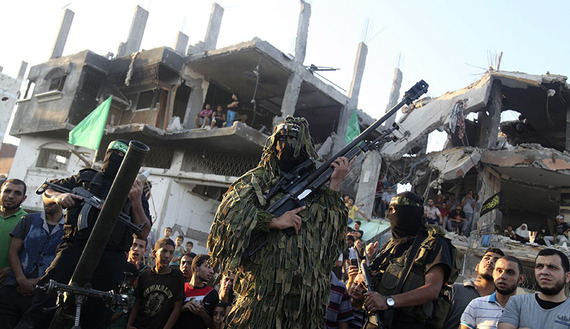
BASKIN: Right. Both sides expressing doubts and they are speaking to their own base, but in reality, this process is going to be controlled by the Board of Peace and we should see action moving within two weeks is what they have allowed themselves to work out the modalities, the actions that need to happen is a pressure on Israel to begin to withdraw pressure on Hamas, to begin to collect weapons and turn them over to a newly deployed Palestinian Police force under the National Committee for the Administration of Gaza, the technocratic committee, who are gearing up to go into Gaza for the first time since they were established eight months ago.
And the process of recovery and rebuilding Gaza will begin slowly. Again, it is a process that will take time. The first steps are most difficult, and that’s why I think the Americans and the mediators are watching very carefully. They were very smart to create a verification mechanism composed of a number of different countries, in order to ensure that not only will this agreement have agreement on both sides, but it will actually be implemented.
WHITFIELD: All right, Gershon Baskin, always a pleasure having you. Thank you.
BASKIN: Thank you.