We are constantly being told that the IDF is short of tens of thousands of soldiers. The proposed solutions are familiar: recruit more ultra-Orthodox men, extend compulsory service, lengthen reserve duty and demand still more from those who already carry the burden.
But this debate avoids a more fundamental question.
Perhaps Israel does not primarily suffer from a shortage of soldiers. Perhaps the state has created far more security obligations than any reasonable army should be expected to sustain.
Nowhere is this clearer than in the occupied West Bank.
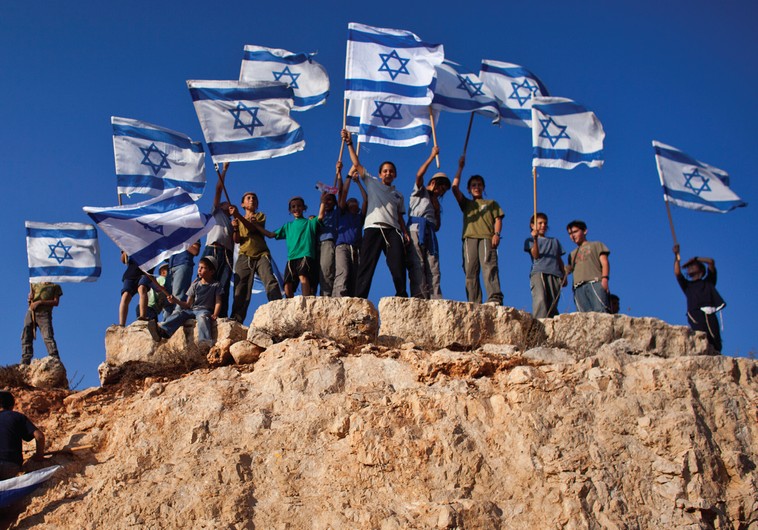
Alongside the established settlements, there are now more than 200 settlement outposts. In recent years, another form of settlement expansion has grown rapidly: isolated agricultural and shepherding farms, now numbering more than 100. Some consist of only a few families or even a handful of individuals, yet they extend control over enormous areas of land and create a disproportionate security and political burden for the State of Israel.
Every isolated settlement, outpost and farm creates a military obligation. Access roads must be protected. The surrounding area must be patrolled. Soldiers must respond to attacks and confrontations, provide intelligence coverage, deal with friction between settlers and Palestinians and remain available to reinforce forces already deployed.
That burden falls on the IDF.
The settlers and their political patrons decide to establish themselves on another hilltop or isolated tract of land. But the consequences are imposed on the entire country.
Young Israelis serve longer. Reservists are called up repeatedly. Families lose parents for weeks and months. Businesses lose employees. The economy pays the price. Military units that should be preparing for Israel’s genuine strategic threats are instead dispersed across hundreds of points in the West Bank.
And then we are told that Israel does not have enough soldiers.
Before demanding tens of thousands more, we should ask a different question:
Why are we continually creating more places that soldiers must defend?
Israel’s security resources are not unlimited. The IDF’s first responsibility must be to defend the State of Israel against genuine security threats. It should not become a permanent security service for an ideological settlement project that expands year after year and then demands ever more soldiers to protect it.
The number of soldiers Israel needs is not simply a demographic fact. It is also the consequence of political choices.
If the government continually establishes, legalizes or enables new settlements, outposts and isolated farms throughout the West Bank, it continually creates new security requirements. Israel cannot endlessly expand the territory and population the army is expected to defend and then complain that the army is understaffed.
That is not a manpower strategy. It is strategic irresponsibility.
The settlers living outside the major settlement blocs, particularly those establishing isolated outposts and farms deep inside the West Bank, are not strengthening Israel’s security. They are undermining it. By forcing the IDF to disperse forces across hundreds of vulnerable locations, this settlement project has become a direct burden on Israel’s security and an enemy of Israel’s long-term security interests.
The future of the major settlement blocs can be negotiated in the framework of an Israeli-Palestinian agreement. But isolated settlements, outposts and farms scattered throughout Palestinian territory serve no serious Israeli security purpose.
They stretch the army, increase daily friction with Palestinians, require roads and military deployments that must be protected indefinitely and make political separation increasingly difficult. They also transform what should be the military occupation into permanent territorial control.
The cost is not only military.
Settlement expansion has become one of Israel’s greatest diplomatic and political liabilities.
For decades, Israel’s strength depended not only on military power but also on international legitimacy. Many of Israel’s friends believed that, despite the conflict and despite profound disagreements over policy, Israel ultimately sought a political solution with the Palestinians.
That belief is rapidly disappearing.
The continuous expansion of settlements, outposts and isolated farms sends the opposite message: that Israel intends to make permanent control over the Palestinians irreversible and ensure that no viable Palestinian state can ever emerge.
Israel is losing support not only among those who have always opposed it, but among people and communities that traditionally stood with it: young Americans, Europeans, liberal democrats, Jewish communities abroad and political leaders who once regarded support for Israel as almost automatic.
We should not dismiss all of this as antisemitism. Antisemitism is real and must be confronted. But criticism of policies that continuously expand Israeli control over occupied Palestinian territory cannot simply be explained away as hatred of Israel.
A serious country must be willing to ask whether its own policies are contributing to its isolation. The settlement enterprise is therefore imposing two enormous costs simultaneously: it weakens Israel’s security at home and Israel’s legitimacy abroad.
That is why the next Israeli government must reverse course.
It should not merely freeze the creation of new outposts and farms. It must begin dismantling settlements, outposts and isolated farms outside the major settlement blocs that obstruct political separation and impose unnecessary military burdens.
The obvious place to begin is with unauthorized outposts and isolated agricultural and shepherding farms established to take control of large areas with very small numbers of settlers.
Stop building new ones.
Stop legalizing outposts after they have been established.
Stop allowing settlers to create facts on the ground and then expecting the IDF to defend those facts indefinitely.
Begin removing those whose existence provides Israel with no meaningful security advantage while imposing enormous military, political and diplomatic costs.
This is not a concession to Hamas. It is not a reward for terrorism. And it is not something Israel should do because Washington, Brussels or anyone else demands it.
Israel should do it because it is in Israel’s own interest.
The next government must demonstrate that Israel seeks political separation from the Palestinians and ultimately wants to live alongside them in peace rather than permanently rule over them. That would represent a fundamental break with the direction of the Netanyahu-Smotrich-Ben-Gvir government. Their political project has been the opposite: expanding settlements, legalizing outposts, extending Israeli control throughout the West Bank, preventing Palestinian statehood, encouraging Palestinian displacement and even discussing renewed Israeli settlement in Gaza. Smotrich, Ben-Gvir and others on the extreme right have made little effort to conceal their objective. Their vision is not separation between Israelis and Palestinians. It is permanent Israeli control over the entire territory with as few Palestinians as possible remaining on the land.
Taken to its logical conclusion, that is a program of displacement and ethnic cleansing.
That cannot be Israel’s future.
Israel cannot remain both Jewish and democratic while permanently controlling millions of Palestinians who have no political rights in the state that controls their lives. Nor can Israel remain secure if its army must permanently protect an ever-expanding network of ideological enclaves spread throughout another people’s territory.
The settlement movement likes to present itself as Israel’s first line of defense.
Increasingly, the opposite is true.
The more isolated settlements Israel creates, the more roads must be secured, the more territory the army must patrol, the more friction is generated and the more soldiers are required.
This does not make Israel safer. It makes Israel harder to defend.
The question facing the next government is therefore not simply whether Israel can recruit another 20,000 or 30,000 soldiers. The deeper question is whether Israel will continue pursuing policies that create the need for those soldiers in the first place.
A serious national-security strategy would reduce unnecessary military obligations and concentrate the IDF on defending Israel and preparing for the country’s genuine strategic threats.
That means reversing settlement expansion, dismantling isolated outposts and farms, and beginning a process of separation rather than binding Israelis and Palestinians together under permanent military rule.
It also means sending Palestinians, Israel’s neighbors and the world an unmistakable message: Israel intends to live within secure and recognized borders and to seek peace, not permanent domination over another people.
Israel needs a powerful army. It needs soldiers prepared to defend the country against its enemies.
What it does not need is an army permanently deployed to protect every ideological project established on every available hilltop in the West Bank.
Defending the State of Israel is a necessity. Defending every hilltop is a political choice.
The next government should choose differently.