As Israeli ground troops move into the Gaza Strip, fears for the hostages taken by Hamas are growing. The decisions facing the country are growing more difficult by the day.
The bouquets of roses have dried out, and washed-out Tupperware containers are stacked up on the kitchen countertop, ready to be picked up. Neighbors, friends and relatives brought so much that they couldn’t possibly have eaten it all by themselves, says Merav Svirsky. The 42-year-old, a performance artist and mother of two young children, is now the head of her family. They observed the shiva, the Jewish ritual of bidding farewell to their parents, for the standard seven days. After that, they opted for hope. Svirsky and her siblings want to believe that their brother Itai will ultimately return.
Hamas terrorists murdered her parents Orit and Rafi Svirsky on October 7 in the Be’eri kibbutz, while Merav’s 38-year-old brother was abducted and taken to Gaza. The days that followed were chaotic, she says. The rings under her eyes are dark, looking as though she cried herself dry during that time. But she sounds determined and strong as she describes from the sofa of her home in Tal Shahar in short, clear sentences why she believes her brother will survive. “We have no right to just sit back,” she says.
In Israel, the hopes of thousands also depends on which list their missing relatives and friends are on. Even almost four weeks after October 7, the status of many victims remains unclear. The terrorists murdered around 1,400 people and took 242 as hostages to the Gaza Strip. Four of them have since been freed, and the military managed to rescue a female soldier during a raid this week.
Israel Still Has 40 People Registered as Missing
The Israeli authorities are still unable to say exactly what happened to another 40 people, who are still registered as missing. The family of 22-year-old German national Shani Louk, whose mutilated body was driven through the streets of Gaza on October 7, learned a few days ago that she is dead.
Ten days after the massacre, Israeli authorities informed the Svirskys that Itai’s name had been transferred from the list of missing persons to that of the hostages. “That gave us a goal and a direction,” says Merav Svirsky. Her twin brother Jonatan, sitting next to her on the yellow couch, places his hand on her knee and nods. The siblings are hoping that Itai will be released in a prisoner exchange or freed by the army.
Like Yocheved Lifshitz, the 85-year-old woman abducted from the Nir Oz kibbutz on October 7 before being released by Hamas a week ago, along with three other women. She spoke last week at a press conference about the Hamas tunnels, which she described as resembling a “spider’s web,” and reported that she had been treated relatively humanely.
But most families still have reason to worry. They include the relatives of Vivian Silver, 74, whose mobile phone was geo-located in Gaza after October 7. She spent many years as a peace activist, then Hamas terrorists set fire to her home in the Be’eri kibbutz. Or the family of Roni Eshel, 19, who was performing her military service as a scout on the fence outside Gaza when Hamas fighters abducted her. Several female soldiers from her unit are still missing. Two managed to escape on October 7, but many are dead. Her family has searched hospitals all over the country, but in vain.
Israel began its long-awaited ground offensive in the Gaza Strip on October 27. And since then, relatives of the hostages being held by Hamas have grown even more concerned about the fates of their loved ones. Will the ground offensive force the Islamists into a prisoner exchange? Or will they use the hostages as human shields? Take revenge on them? How safe are the hostages from the increasingly heavy bombardment by their own army? Hamas claims that the Israeli shelling of the Jabaliya refugee camp on Tuesday cost the lives of seven hostages, although there is no way of independently corroborating that figure. “It’s difficult to process all the different information,” says Merav Svirsky. “I don’t know what to feel.”
A slideshow is running on a laptop sitting on a chair next to the siblings in the living room. It shows photos from the lives of their murdered parents and abducted brother. There are images of their mother Orit Svirsky with her grandchildren in her arms and with friends in a field full of poppies. There is a photo of their father, Rafi Svirsky, with his three golden retrievers and a grandchild on his lap. Others show Itai Svirsky with his grandmother, and with Merav’s children. Jonatan Svirsky says they ran these photos during the shiva to remember their parents. “And Itai, of course.”
Be’eri was the center of the Svirsky family’s universe. Mother Orit established an art gallery in the kibbutz and was responsible for welfare and health in the administration. Her ex-husband Rafi managed the finances – and had, in recent months, regularly protested in Tel Aviv against the policies of the right-wing nationalist government. Jonatan, who, like his other brothers, inherited his father’s thick hair and broad chin, also lived in Be’eri. Itai, who worked as a life coach in Tel Aviv, often visited his 97-year-old grandmother Aviva, who suffers from dementia, in the kibbutz. They all gathered here almost every weekend. “Be’eri is,” says Merav Svirsky, then immediately correcting herself. “Be’eri was a decidedly peaceful and serene place.” She even grew accustomed to the occasional shelling from the Gaza Strip, which is located just 5 kilometers (around 3 miles) away. When she would walk her dog along the kibbutz fence, she would sometimes wonder if terrorists might one day try to cross it. “But we trusted our army and the intelligence services,” she says.
That trust was destroyed on October 7. It is the duty of every country to keep its people safe from harm. The foundational principle of the Zionist project, the creation of a Jewish state, was to ensure the safety of Jews after persecution and genocide. By that measure, October 7 was Israel’s ultimate failure.
More than 130 Murdered in One Kibbutz
Jonatan Svirsky survived the Hamas attack because his house is located in the middle of the kibbutz. His grandmother Aviva has no memory of how she escaped. The terrorists murdered her Filipino nurse. Like the grandmother, the parents lived on the west side of Be’eri, where it is likely the death squads from Gaza struck first. When Merav heard about the attack, she called her mother. Orit Svirsky whispered that she couldn’t speak at that moment before then writing in the family’s WhatsApp group that she and Itai had hidden under fleece blankets in the safe room, and that they could hear Arab voices and gunfire all around them. “Pray for us,” she texted. Later, she wrote of explosions and shouts of “Allahu akbar.” Their father Rafi wrote that he was in the safe room of his house with his dogs. The specially reinforced rooms were designed as protection against rockets and mortar shells – but not as a refuge from armed attackers with canisters full of gasoline and wielding automatic rifles. The doors can’t be locked from the inside. Both parents kept asking when the army would finally free them. At around 10:15 a.m., Rafi Svirsky wrote that terrorists had entered his home. “They’re here.” In his final message, Itai wrote shortly after 10:30 a.m. that the windows in his mother’s home had been shattered. Then he asked: “What happened to our father?” At around 10:50 a.m., Mother Orit sent her last message, a heart emoji. The siblings never heard anything from them again. “At that moment, I could feel that our old life had ended,” says Merav Svirsky.
It wasn’t until October 17 that DNA samples led to the identification of Orit and Rafi Svirsky. Their children are now calling the massacre in Be’eri, where terrorists murdered more than 130 people, “our Holocaust.”
In the war against Hamas, there is a risk that the Jewish state will once again fail its people – the hostages and those who are still missing. “In the Jewish faith, rescuing prisoners is a commandment,” says political scientist Avi Shilon of Tel Hai College in northern Israel. “The Talmud considers hostage-taking to be worse than starvation and death. Israel has always acted on that basis,” says Shilon. In 1985, after the first Lebanon war, the state exchanged 1,150 imprisoned terrorists, some of whom had been convicted of murdering numerous Israelis, for three soldiers who had been captured by a Palestinian faction. In 2008, Israel reached a deal with the Hezbollah militia in Lebanon to exchange the terrorist Samir Kuntar and four other militiamen for the remains of the soldiers Ehud Goldwasser and Eldad Regev. In 2011, the state exchanged 1,027 Palestinian prisoners for Gilad Shalit, an Israeli soldier who had been captured by Hamas five years earlier.
The Prisoner Exchange Window
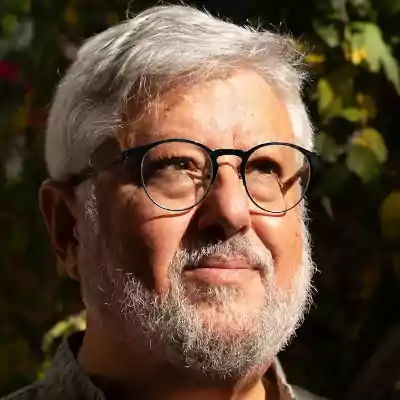
Gershon Baskin
“The only option now,”
he says,
“is an ‘all-for-all’ deal.”
The Israeli Prison Service says that 5,200 Palestinians are currently being held in the country, between 20 and 30 percent of whom are members of Hamas. Since October 7,800 people have been arrested in the Palestinian Territories, including some 130 terrorists who are said to have been involved in the massacres in the south. Baskin says that the Egyptians and Qataris are mediating negotiations.
According to media reports, Mossad chief David Barnea personally discussed a possible deal for the release of the remaining 237 hostages with emirate officials in Doha over the weekend. But the pressure on Qatar, and thus Hamas, doesn’t appear to have been sufficient. The fragmentation of Hamas into a more moderate wing and a more radical wing, which holds more power, is also proving problematic, says Baskin.
The fragmentation of Hamas into a more moderate wing and a more radical wing, which holds more power, is also proving problematic.
Gershon Baskin.
He says that an “all-for-all” deal in Israel would require “broad public approval and decisive political leadership.” But neither of those, he says, is currently in sight. Baskin says that the window of opportunity to free the hostages could close “within days.” At the point when the Israeli soldiers force their way into the Hamas tunnels, “it will be too late,” Baskin says. According to an as yet unpublished poll by the Hebrew University of Jerusalem, approval for “painful concessions” to get the hostages back rose from 43 to 48 percent between October 12 and 26. That means that more than half of Israelis are still not in favor of a far-reaching deal.
And yet the fate of the abductees is on just about everyone’s minds in Israel these days. The photos and names of the hostages – between nine months and 85 years of age, many of them ill and dependent on medication – flicker across displays, and can be seen on posters and stickers, in newspapers and news programs. The hashtag #bringthemhome is emblazoned on billboards on the side of roads. Public relations professional Haim Rubinstein took part in setting up the Hostages and Missing Families Forum. The organization has attracted 2,000 volunteer workers and offers psychological help and financial support to relatives. It is also sending delegations around the world to draw attention to the fate of the abductees.
Merav Svirsky says she’s trying to tune out the news. “The biggest problem is that we can no longer trust our leaders,” she says. That’s why the siblings turned to Germany after October 7. Their German grandmother once had to flee from the National Socialists to what was then the British Mandate for Palestine. Itai’s twin siblings say that he had recently been issued a German passport, which he applied for to make travel easier. “We never thought that the country from which our grandmother once had to flee would one day become the greatest hope for her grandson,” they say.
In contrast to the officials appointed by Israel to deal with the situation, they say, staff at the Foreign Ministry in Berlin and the German Embassy in Tel Aviv are easy to reach. The siblings say that a German crisis officer tried to answer the questions of the 12 families of hostages who hold German passports. Particularly in contrast to Gal Hirsch, the Israeli government’s coordinator for the rescue effort, says Merav Svirsky, the Germans have come across as “honest and serious.” She says that Hirsch’s only advice to them was to turn to the foreign media.
Relatives Critical of Israeli Government
The U.S. government, meanwhile, has apparently taken a totally different approach. Adi Levitan’s sister Judith and niece Natalie Ranaan, both U.S. citizens, were released by Hamas on October 20 after Washington’s intervention. U.S. Secretary of State Antony Blinken, according to the brother in his apartment in a suburb of Tel Aviv, met relatives in person, and U.S. President Joe Biden spoke to them for 90 minutes in a Zoom call. He says Biden came across as “very warm and compassionate.” The Israeli government, meanwhile, didn’t even bother to have a department head contact him, he says.
According to reports in the New York Times, U.S. officials have also repeatedly exerted pressure on Israel. They reportedly urged Israeli leaders to postpone the ground offensive out of fears for the fate of the hostages, including likely more than 100 people holding dual nationality – and to generally proceed with more caution.
Yaakov Peri, the former head of the domestic intelligence service Shin Bet, believes there is no alternative to the invasion, despite all the reservations. The Israelis, he says, “unfortunately still don’t know where the individual hostages are,” whether they are in the hands of Hamas, Islamic Jihad or ordinary gangsters who also flocked into southern Israel on October 7 and abducted people. He argues that the army’s approach is the right one under the circumstances, even though it is risky.
Israeli Defense Minister Yoav Gallant, who, like Prime Minister Benjamin Netanyahu, only met with relatives of hostages and missing persons three weeks after the massacre, sought to reassure them. “Returning the hostages is part of the victory,”
he said. But he also described Hamas’ offer to exchange all hostages for all Palestinian prisoners as “illusory,” adding that it would primarily serve to create psychological insecurity in Israel. Netanyahu said that the key to the prisoners’ release is the amount of pressure applied.
And so a rift is opening up in Israeli society. Between relatives of hostages like Merav Svirsky, who are demanding direct negotiations with Hamas and a cease-fire: “If that’s what it takes.” And those who support the strategy of pressure. Merav Svirsky says she doesn’t understand the purpose of “wiping out” Gaza, as some politicians are calling for. Many Palestinians in Gaza, Svirsky says, had nothing to do with the attack on southern Israel – and they should not be killed out of revenge. “For more than 20 years, we have seen that violence doesn’t solve our problems,” she says. “And we also have to preserve our own humanity.”
“I feel guilty that my brother is trapped in a tunnel somewhere in Gaza while I’m here eating cookies,” says Jonatan Svirsky. He says he often imagines Itai sitting in a dark room and thinking every time the door opens that he is about to be executed. “But,” Jonatan says after a few seconds, “of course, he could also be released.”
Click here for the English translation.
By Muriel Kalisch, Alexander Sarovic und Thore Schröder with additional reporting by Michal Marmary.