
Insights
Creating Peace: The Bottom-up Approach
Gershon Baskin shares his ideas about what can be done from “bottom-up” to create peace
Gershon Baskin shares his ideas about what can be done from “bottom-up” to create peace
Both sides benefit from this arrangement in meeting the needs and demands of both sides. Israel gets verification of the arrests, trial and imprisonment of suspected terrorists. Arafat gets guarantees against Israeli bombings of Palestinian prisons. Both sides gain significant American, Canadian and EU encouragement to implement the ceasefire. Perhaps this model of American, Canadian and EU observers can also serve both sides in guaranteeing the implementation of future agreements and arrangements between them.
Gershon Baskin shares some ideas/actions that will make a small contribution towards a “bottom-up” peacemaking strategy.
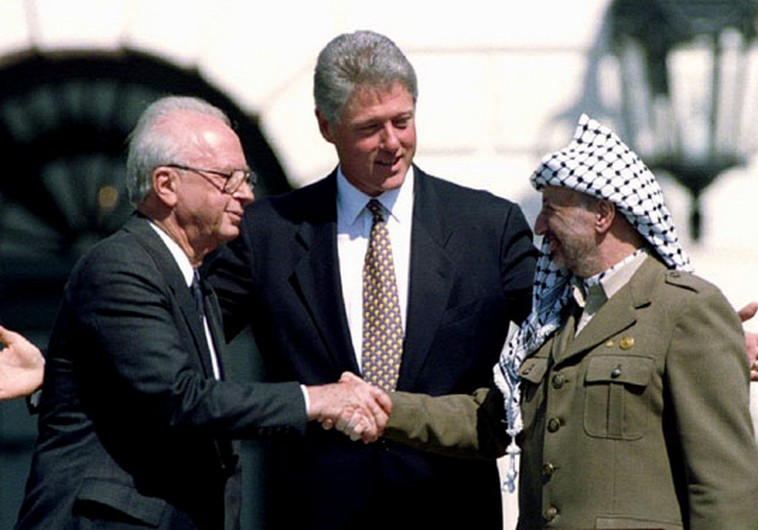
In this paper Gershon Baskin shares his personal experience with the people involved in the Oslo process that started in 1993 with secret talks between Israel and the PLO and soon became a cycle of negotiations, suspension, mediation, restart of negotiations and suspension again. Gershon Baskin touches upon the agreements that were reached, until the Oslo process ended after the failure of the Camp David Summit in 2000 and the outbreak of the Second Intifada.
Gershon Baskin believe’s that the launching of the intifada was neither planned or strategically thought of by the Palestinian leadership – be it the PA or the Tanzim. It was a series of events that developed rapidly, escalated and got out of control. Decisions regarding its continuation and its course were made mostly following the events themselves. This paper is how Gershon thinks it unfolded.

Who owns Jerusalem and who has the right to control the city?

Gershon Baskin presents an exercise in creative thinking and problem solving where the focus is on interests, needs, fears and concerns, so that the participants are free to relieve themselves of representing official positions.
The 2000 Camp David Summit was a summit meeting at Camp David between United States president Bill Clinton, Israeli prime minister Ehud Barak and Palestinian Authority chairman Yasser Arafat. The summit took place between 11 and 25 July 2000 and was an effort to end the Israeli–Palestinian conflict. The summit ended without an agreement. On July, 6, 2000, a few days before the beginning of the summit, Gershon Baskin sent the following memo to Gilead Sher, who served as Chief of Staff and Policy Coordinator to Israel’s former Prime Minister and Minister of Defense, Ehud Barak.
Gershon Baskin details his proposal for Peace in Jerusalem non-negotiables 1. Essential “non-negotiables”: a. Israeli sovereignty over the Western Wall of the Temple and the entrance to the Western Wall compound b. Israeli sovereignty over the Jewish Quarter of the Old City c. Israeli sovereignty over the Israeli neighborhoods Read more

Initial research shows that these proposals seem to be feasible and beneficial enough to be taken seriously in preparation for the future water negotiations in the region.